Friday, March 03, 2006
living in robert altman's los angeles
At long last, the man is finally getting his Oscar. I do my best to praise his representation of the city I love.


Friday, February 24, 2006
unknown white male
I've been a fan of Rupert Murray's documentary since last year's Los Angeles Film Festival. Now it's finally receiving its theatrical release. Here's my review.
islam and you
Brendan Bernhard's piece in the LA Weekly does a great job of discussing the recent rash of violence propagated by some radical Islamists. Blaming no one, Bernhard simply asks that Americans who don't share the same faith at least be aware of the goal of some disturbing extremists.
sick of los angeles traffic?
Fans of The Simpsons can't hear the word "monorail" without laughing ... some of us even remember the words to the song in that particular episode. But author Ray Bradbury makes a pretty strong argument for the necessity of this form of air transportation in Los Angeles. Next time you're on the freeway, going nowhere, keep it in mind.
Monday, February 13, 2006
long may he run
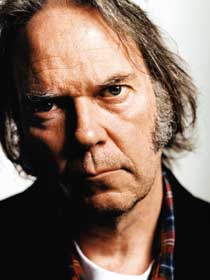
Neil Young, that is. Jonathan Demme's fine new concert film about the man heads up my latest Consumables.
Sunday, February 12, 2006
Hating (But Understanding) 'American Idol'
Thomas de Zengotita's excellent piece on the allure of American Idol comforts all of us who hate that show by agreeing with our complaints. Yes, it is a phony way to make the spectator think he is just as important as the performer. Yes, it does further emphasize the mass worshipping of pop musicians over everything else, such as being politically active.
But he also nicely explains why music holds such sway over us:
But he also nicely explains why music holds such sway over us:
[T]astes in pop music go right to the core of who you are, with a depth and immediacy no other art form can match. Music takes hold of you on levels deeper than articulated meaning. That's why words, sustained by music, have such power. There is nothing like a song for expressing who we are.
writing about the wu-tang clan
I can't imagine how current teenagers could have any understanding of what a talented (and often hilarious) outfit the Wu-Tang Clan were back in the '90s. This recent interview by Tom Breihan with several Clan members as they attempt a reunion tour distills their essence. Sadly, no quotes from chief genius RZA.
Saturday, February 11, 2006
Top Ten Movies of 2005
I've been meaning to put this up for a few weeks now. Let the mild debate begin.
10. King Kong
Some movies have such tremendous upside that you forgive their limitations. Such is the case with King Kong, the most brazenly big movie in many a moon. Peter Jackson doesn’t just want to outdo the original, he wants to outdo every blockbuster ever made. That emphasis on size and spectacle diminishes some of the human elements, but Jackson knows that audiences don’t respond just to insightful characters – they respond quite well to being scared and thrilled and beaten across the face with unbelievable action set pieces. After being set up to be the year’s biggest box-office winner, this monster film has ironically almost become forgotten in the tidal wave success of Chronicles of Narnia. A reevaluation is in order – it’s still no deep piece of personal cinema, but what a show.
9. The Upside of Anger
Most of the attention for this little gem was centered around Joan Allen’s terrific lead performance, which deserved an Oscar nomination if enough voters could remember back to March. Allen plays an angry, grieving mother of four sexy, unique young women who’d rather drink herself into oblivion than face the truth that her no-good husband has walked out on them – and specifically her. In an equally nuanced turn, Kevin Costner plays the totally worst person for her to fall in love with, and much of Mike Binder’s film concerns the co-dependent relationship between two beaten individuals. The ending pissed off some people, but it was simply one more example of the film’s portrait of the bittersweet irony and unpredictability of this shitty, weird thing called life.
8. 2046
Writing about Eternal Sunshine of the Spotless Mind, I praised Jim Carrey’s performance by saying, “I can't think of a performance that encapsulated the essence of being dumped so vividly.” Tony Leung’s portrayal of a depressed man on the rebound comes very close. Like Joan Allen in Anger, he is devastated by love and so he acts out in ways that we might not condone but, trust us, we understand – we’ve all been there before. Compromising his art for bigger paydays, getting involved with several women who (despite their beauty and well-defined appeal) are merely time-fillers, and pining pining pining for the one who got away, Leung gives us a definitive portrait of that time in life when a person decides to destroy his old persona in order to escape himself and his past. I’m just about alone in preferring Wong Kar-Wai’s sequel to the original, but maybe it’s because its theme of loss – beautiful, agonizing, luxurious loss – is so rarely captured on film. And it also goes a long way to showing how the remembrance of a love is often more poignant than the love itself.
7. The Three Burials of Melquiades Estrada
Not since The Straight Story has a cinematic travelogue worked so well at saying so much while not doing much of anything. Tommy Lee Jones directs himself as a small man with a big heart for his senselessly murdered friend whom he promised long ago to take back to his home in Mexico in the event that he died. Jones makes good on that pledge – and brings along his friend’s killer (an underrated Barry Pepper) as equal parts vengeance and life lesson. Jones does a great job deftly handling the film’s occasional moments of surreal oddness, but what comes across strongest is the unspoken bond between men, how years of marginal existence and buried disappointments don’t get resolved, they just change locale.
6. Nobody Knows
No one needs to know it’s based on a true story – these sorts of things creep up in the newspaper and the late local news all the time. Four young children are abandoned in a shitty apartment by their feckless mother and must learn to live on their own. But without any fancy manipulative tricks, filmmaker Hirokazu Kore-eda observes this social drama over agonizing months. Our hero is Akira, a 12-year-old boy played by Yuya Yagira who must learn to be a grownup too early in order to keep his siblings alive, and we come to love him, not because he’s adorable but because he’s pure of heart and brave and 12 years old with no guarantee of seeing 13. Instead of being sensational, the film is quiet, mimicking the lack of attention these lost children receive from the uncaring outside world. And by being so calm, Nobody Knows makes us angry – at their mother, at any society that lets these sorts of silent tragedies happen every day.
5. Brokeback Mountain
One feels almost defensive for loving this movie. Surely I got suckered in by the hype, right? Don’t I realize how obvious it is? Aren’t I aware how it fails to enumerate every hardship ever experienced by every gay person ever? Let history decide if Brokeback Mountain was too tame – right now it’s simply the best love story of the year, an intriguing twist on the “repressed love story” plotlines that were all the rage more than 10 years ago. The men have gotten enough accolades – as well they should – but the women deserve special notice too. No irritating bitches, no whining nags, Michelle Williams and Anne Hathaway are lovely creatures who deserve good men and think they found them. And therein lies the tragedy – Jack and Ennis are doomed to unhappy lives, but so are those around them. The film doesn’t champion the rights of homosexual love as much as ask what kind of world do we want to live in if somebody somewhere can’t be free to be with the one he loves.
4. Saraband
You’ve come to the end of your life. You’re in your 80s, you’ve had a distinguished career, you have adoring children and grandchildren, you’ve known the love of a few good women – here at the end, you can finally look back and smile, right? Not in an Ingmar Bergman movie. In his sequel to 1974’s Scenes from a Marriage, he brings back divorced couple Liv Ullmann and Erland Josephson for an agonizing reunion after years of separation. Shooting in digital and staging his scenes theatrically, Bergman gives Saraband a jarring, otherworldly feel that becomes hypnotic – it seems like our planet, but one that’s infinitely more dramatic, emotional and painful than ours. Segmented into chapters – each one a lengthy conversation between the former couple, his seething son from another marriage and that son’s prodigiously talented and troubled daughter – the movie feels like one last passionate blast of contempt and sorrow before death comes knocking on the door, as much for the couple as for the filmmaker whose impressive body of intense masterworks draws to a close.
3. Capote
The best biopic of the year worked so well because nobody thinks of it as a biopic. Rather than imitating Truman Capote – although he gets the mannerisms and voice down nicely – Philip Seymour Hoffman offers an interpretation of the writer, one strengthened and supported by a screenwriter and a director who are less interested in a portrait and more jazzed by a theme. Traveling between the New York literary scene and the Kansas community where the shocking murders occurred, Capote is about success and art and failure and evil and how those things may or may not relate to the main character. Along the way, it dispels the notion that great art is made by great people – frankly, most of them are morally ugly people we’d be better off not knowing – and that great art can somehow redeem selfish intentions and callous souls. Hoffman has been one of those “great actors” who’s been searching for the right part – one that’s not simply showy but resonant and meaningful. Finally, here it is.
2. Batman Begins
It’s possible that Christopher Nolan may not be our purest action director. And, yes, I’m not convinced Katie Holmes was the best choice for the love interest. But those are about my only complaints with this very fine addition to one of Hollywood’s great franchises. As he did with Memento, Nolan shows a fascination with an antihero who exudes a noirish intensity and prefers to live out his days alone, haunted by a sad past. This doesn’t quite seem like the formula for a successful summer blockbuster, but without condescension or cynicism, the filmmaker just goes about his business making what might be the best comic book movie ever, one that’s very dark and also very funny and moving. Top to bottom, except for the above exception, the film is also extremely well cast – Christian Bale is tremendous playing what is essentially a twist on Patrick Bateman, the loathsome rich boy of American Psycho, but several character actors and Oscar winners litter Gotham with distinctive performances and not a one of them is just lazily cashing a check. In short, for the first time in a while, a big tentpole feels like a real film, a true work of art. And, c’mon, Gary Oldman is just terrific.
1. Junebug
It’s an adjective rarely used to describe a film, but it’s all over the glowing notices for Junebug: true. This quiet little masterpiece of cultural divides is so small in scale that its momentous power comes from its trueness, from its ability to accurately depict the world we live in – its social mores, its fears, its institutions of marriage and family and religion – with quiet observation and no judgment. Amy Adams was the breakout star of a perfectly realized ensemble with no weak links – even the guy from The O.C. is great – which seems appropriate for a film that loves all of its characters and understands them all equally. The red/blue state hot-button topicality comes from the viewer’s personal reaction and not from Phil Morrison’s direction, which painstakingly asks us not to love hicks or to give the undereducated a chance but simply to notice how this rarely-chronicled world operates. Even the music by Yo La Tengo strikes the right note of dreamy, everyday wonderment. No pat morals, no big resolutions, no big deal – just a perfect time capsule of our country and all its many contradictions in the early 21st century.
10. King Kong
Some movies have such tremendous upside that you forgive their limitations. Such is the case with King Kong, the most brazenly big movie in many a moon. Peter Jackson doesn’t just want to outdo the original, he wants to outdo every blockbuster ever made. That emphasis on size and spectacle diminishes some of the human elements, but Jackson knows that audiences don’t respond just to insightful characters – they respond quite well to being scared and thrilled and beaten across the face with unbelievable action set pieces. After being set up to be the year’s biggest box-office winner, this monster film has ironically almost become forgotten in the tidal wave success of Chronicles of Narnia. A reevaluation is in order – it’s still no deep piece of personal cinema, but what a show.
9. The Upside of Anger
Most of the attention for this little gem was centered around Joan Allen’s terrific lead performance, which deserved an Oscar nomination if enough voters could remember back to March. Allen plays an angry, grieving mother of four sexy, unique young women who’d rather drink herself into oblivion than face the truth that her no-good husband has walked out on them – and specifically her. In an equally nuanced turn, Kevin Costner plays the totally worst person for her to fall in love with, and much of Mike Binder’s film concerns the co-dependent relationship between two beaten individuals. The ending pissed off some people, but it was simply one more example of the film’s portrait of the bittersweet irony and unpredictability of this shitty, weird thing called life.
8. 2046
Writing about Eternal Sunshine of the Spotless Mind, I praised Jim Carrey’s performance by saying, “I can't think of a performance that encapsulated the essence of being dumped so vividly.” Tony Leung’s portrayal of a depressed man on the rebound comes very close. Like Joan Allen in Anger, he is devastated by love and so he acts out in ways that we might not condone but, trust us, we understand – we’ve all been there before. Compromising his art for bigger paydays, getting involved with several women who (despite their beauty and well-defined appeal) are merely time-fillers, and pining pining pining for the one who got away, Leung gives us a definitive portrait of that time in life when a person decides to destroy his old persona in order to escape himself and his past. I’m just about alone in preferring Wong Kar-Wai’s sequel to the original, but maybe it’s because its theme of loss – beautiful, agonizing, luxurious loss – is so rarely captured on film. And it also goes a long way to showing how the remembrance of a love is often more poignant than the love itself.
7. The Three Burials of Melquiades Estrada
Not since The Straight Story has a cinematic travelogue worked so well at saying so much while not doing much of anything. Tommy Lee Jones directs himself as a small man with a big heart for his senselessly murdered friend whom he promised long ago to take back to his home in Mexico in the event that he died. Jones makes good on that pledge – and brings along his friend’s killer (an underrated Barry Pepper) as equal parts vengeance and life lesson. Jones does a great job deftly handling the film’s occasional moments of surreal oddness, but what comes across strongest is the unspoken bond between men, how years of marginal existence and buried disappointments don’t get resolved, they just change locale.
6. Nobody Knows
No one needs to know it’s based on a true story – these sorts of things creep up in the newspaper and the late local news all the time. Four young children are abandoned in a shitty apartment by their feckless mother and must learn to live on their own. But without any fancy manipulative tricks, filmmaker Hirokazu Kore-eda observes this social drama over agonizing months. Our hero is Akira, a 12-year-old boy played by Yuya Yagira who must learn to be a grownup too early in order to keep his siblings alive, and we come to love him, not because he’s adorable but because he’s pure of heart and brave and 12 years old with no guarantee of seeing 13. Instead of being sensational, the film is quiet, mimicking the lack of attention these lost children receive from the uncaring outside world. And by being so calm, Nobody Knows makes us angry – at their mother, at any society that lets these sorts of silent tragedies happen every day.
5. Brokeback Mountain
One feels almost defensive for loving this movie. Surely I got suckered in by the hype, right? Don’t I realize how obvious it is? Aren’t I aware how it fails to enumerate every hardship ever experienced by every gay person ever? Let history decide if Brokeback Mountain was too tame – right now it’s simply the best love story of the year, an intriguing twist on the “repressed love story” plotlines that were all the rage more than 10 years ago. The men have gotten enough accolades – as well they should – but the women deserve special notice too. No irritating bitches, no whining nags, Michelle Williams and Anne Hathaway are lovely creatures who deserve good men and think they found them. And therein lies the tragedy – Jack and Ennis are doomed to unhappy lives, but so are those around them. The film doesn’t champion the rights of homosexual love as much as ask what kind of world do we want to live in if somebody somewhere can’t be free to be with the one he loves.
4. Saraband
You’ve come to the end of your life. You’re in your 80s, you’ve had a distinguished career, you have adoring children and grandchildren, you’ve known the love of a few good women – here at the end, you can finally look back and smile, right? Not in an Ingmar Bergman movie. In his sequel to 1974’s Scenes from a Marriage, he brings back divorced couple Liv Ullmann and Erland Josephson for an agonizing reunion after years of separation. Shooting in digital and staging his scenes theatrically, Bergman gives Saraband a jarring, otherworldly feel that becomes hypnotic – it seems like our planet, but one that’s infinitely more dramatic, emotional and painful than ours. Segmented into chapters – each one a lengthy conversation between the former couple, his seething son from another marriage and that son’s prodigiously talented and troubled daughter – the movie feels like one last passionate blast of contempt and sorrow before death comes knocking on the door, as much for the couple as for the filmmaker whose impressive body of intense masterworks draws to a close.
3. Capote
The best biopic of the year worked so well because nobody thinks of it as a biopic. Rather than imitating Truman Capote – although he gets the mannerisms and voice down nicely – Philip Seymour Hoffman offers an interpretation of the writer, one strengthened and supported by a screenwriter and a director who are less interested in a portrait and more jazzed by a theme. Traveling between the New York literary scene and the Kansas community where the shocking murders occurred, Capote is about success and art and failure and evil and how those things may or may not relate to the main character. Along the way, it dispels the notion that great art is made by great people – frankly, most of them are morally ugly people we’d be better off not knowing – and that great art can somehow redeem selfish intentions and callous souls. Hoffman has been one of those “great actors” who’s been searching for the right part – one that’s not simply showy but resonant and meaningful. Finally, here it is.
2. Batman Begins
It’s possible that Christopher Nolan may not be our purest action director. And, yes, I’m not convinced Katie Holmes was the best choice for the love interest. But those are about my only complaints with this very fine addition to one of Hollywood’s great franchises. As he did with Memento, Nolan shows a fascination with an antihero who exudes a noirish intensity and prefers to live out his days alone, haunted by a sad past. This doesn’t quite seem like the formula for a successful summer blockbuster, but without condescension or cynicism, the filmmaker just goes about his business making what might be the best comic book movie ever, one that’s very dark and also very funny and moving. Top to bottom, except for the above exception, the film is also extremely well cast – Christian Bale is tremendous playing what is essentially a twist on Patrick Bateman, the loathsome rich boy of American Psycho, but several character actors and Oscar winners litter Gotham with distinctive performances and not a one of them is just lazily cashing a check. In short, for the first time in a while, a big tentpole feels like a real film, a true work of art. And, c’mon, Gary Oldman is just terrific.
1. Junebug
It’s an adjective rarely used to describe a film, but it’s all over the glowing notices for Junebug: true. This quiet little masterpiece of cultural divides is so small in scale that its momentous power comes from its trueness, from its ability to accurately depict the world we live in – its social mores, its fears, its institutions of marriage and family and religion – with quiet observation and no judgment. Amy Adams was the breakout star of a perfectly realized ensemble with no weak links – even the guy from The O.C. is great – which seems appropriate for a film that loves all of its characters and understands them all equally. The red/blue state hot-button topicality comes from the viewer’s personal reaction and not from Phil Morrison’s direction, which painstakingly asks us not to love hicks or to give the undereducated a chance but simply to notice how this rarely-chronicled world operates. Even the music by Yo La Tengo strikes the right note of dreamy, everyday wonderment. No pat morals, no big resolutions, no big deal – just a perfect time capsule of our country and all its many contradictions in the early 21st century.
Thursday, February 09, 2006
'Manderlay': Even So-So Lars Von Trier Is Pretty Good
I loved Dogville so much that I both feared and kinda looked forward to the second installment in Lars von Trier's "U.S.A." trilogy, Manderlay -- I didn't want him to diminish the first film's power but I wanted to see what he would come up with next. Now, I know, and while I didn't love it, I'm still pretty impressed by it.
Monday, February 06, 2006
pazz & jop
The Village Voice's annual music poll, Pazz & Jop, brings together close to 800 music critics to vote for their favorite albums and singles. Here's my ballot -- I was much closer to the consensus picks than usual.
Wednesday, February 01, 2006
farewell to chris penn
An actor in search of a defining role, Chris Penn came closest to greatness with his understated performance in Robert Altman's Short Cuts. In my latest Consumables, I remember Mr. Penn and review Bubble and the transfixing Tropical Malady.
there goes your favorite local record store
With a nice mixture of music-geek purity and acute business sense, Tanveer Badal reports on the final days of a Los Angeles institution, Aron's Records. Badal used to work at Aron's and captures the essence of what made the store so special in its heyday, while accurately detailing what brought about its downfall.
I feel very much marooned without Aron's. (No doubt people on the Westside feel equally weepy about the close of Rhino Records in early January of this year.) Amoeba is simply too gargantuan to give the same intimate pleasure of discovery that Aron's used-record bins provided. It's a very good store, but it can't compare to my first love.
I feel very much marooned without Aron's. (No doubt people on the Westside feel equally weepy about the close of Rhino Records in early January of this year.) Amoeba is simply too gargantuan to give the same intimate pleasure of discovery that Aron's used-record bins provided. It's a very good store, but it can't compare to my first love.
Saturday, January 28, 2006
bubble
You don't always have to agree with a critic to appreciate his perspective on a film. Take Bubble, a movie that I think works more as an interesting experiment than a fully-realized film. That doesn't stop Roger Ebert from loving it, and I think he raises several good points about its merits and the wisdom of its day-and-date "simultaneous delivery" strategy.
music as more than just something to pass the time
Sometimes reading a glowing review about a piece of work is more colorful and evocative than experiencing the actual work itself.
I still remember being a kid and reading Roger Ebert's ecstatic raves for Apocalypse Now and Raging Bull and wanting desperately to see movies that inspired such jubilant praise. (Consequently, when I finally got a chance to see those films, the resulting feeling was akin to hearing a game on the radio versus watching it on television -- or reading the book versus seeing the film adaptation -- in that the image I created in my mind was more personal, special and unlimited than the real thing could possibly turn out to be.)
These thoughts were swirling around in my head after reading Ted Conover's discussion of Stanley Booth's The True Adventures of the Rolling Stones (also known as Dance With the Devil: The Rolling Stones & Their Times). Beyond simply reviewing the book, which chronicles the band's 1969 U.S tour and sounds like a terrific read, Conover reflects on the value of popular music in society -- and how that value has changed over time. Booth puts it succinctly: "In the sixties we believed in a myth -- that music had the power to change people's lives. Today people believe in a myth -- that music is just entertainment."
I couldn't agree more. And it makes me really want to read the book.
I still remember being a kid and reading Roger Ebert's ecstatic raves for Apocalypse Now and Raging Bull and wanting desperately to see movies that inspired such jubilant praise. (Consequently, when I finally got a chance to see those films, the resulting feeling was akin to hearing a game on the radio versus watching it on television -- or reading the book versus seeing the film adaptation -- in that the image I created in my mind was more personal, special and unlimited than the real thing could possibly turn out to be.)
These thoughts were swirling around in my head after reading Ted Conover's discussion of Stanley Booth's The True Adventures of the Rolling Stones (also known as Dance With the Devil: The Rolling Stones & Their Times). Beyond simply reviewing the book, which chronicles the band's 1969 U.S tour and sounds like a terrific read, Conover reflects on the value of popular music in society -- and how that value has changed over time. Booth puts it succinctly: "In the sixties we believed in a myth -- that music had the power to change people's lives. Today people believe in a myth -- that music is just entertainment."
I couldn't agree more. And it makes me really want to read the book.
Sunday, January 22, 2006
Why Nobody Has Heard of Hou Hsiao-Hsien or Jia Zhangke, Part Two
The recent redesign of the LA Weekly website has made it a little tricky to find a lot of archived articles at the moment, but thankfully I was still able to hunt down David Ehrenstein's report from last summer, during the height of the "boxoffice slump" media frenzy, about foreign films' challenges in getting into U.S. theaters.
Ehrenstein lays out the sad economics of the situation -- and why, like with the major studios, independent distributors have to rely more and more on DVD sales to shore up their bottom line.
(Note: Part One of this thread is here.)
Ehrenstein lays out the sad economics of the situation -- and why, like with the major studios, independent distributors have to rely more and more on DVD sales to shore up their bottom line.
(Note: Part One of this thread is here.)
Saturday, January 21, 2006
Why Nobody Has Heard of Hou Hsiao-Hsien or Jia Zhangke
Recently, a friend's father lamented that today's cinema has no Bergman, no Fellini, no Antonioni. Where, he wondered, were all the great new foreign filmmakers?
The answer is that they're still very much out there, but that American audiences hear so little about them. This piece by Anthony Kaufman in the New York Times helps explain why foreign filmmakers are becoming an endangered species on U.S. screens. The culprits range from lack of media attention to the competition for art-house space, but here's a succinct summation from the head of a small distribution company:
(Note: Part Two of this thread is here.)
The answer is that they're still very much out there, but that American audiences hear so little about them. This piece by Anthony Kaufman in the New York Times helps explain why foreign filmmakers are becoming an endangered species on U.S. screens. The culprits range from lack of media attention to the competition for art-house space, but here's a succinct summation from the head of a small distribution company:
"I feel as if there's almost no auteur draw anymore. As opposed to 20 years ago, you were marketing the movies around the filmmaker -- Fassbinder's new film, Godard's new film. We still do it, but the honest truth is that the filmmaker matters increasingly little today."Which I think is very true and really sad.
(Note: Part Two of this thread is here.)
Wednesday, January 18, 2006
a great start to 24
Glowing reviews of Kiefer Sutherland's hit show, Fiona Apple's Extraordinary Machine, and The Three Burials of Melquiades Estrada highlight my latest installment of Consumables.
Saturday, January 14, 2006
glory road
Another January, another inspirational true-life basketball story. Here's my review of Glory Road.
springsteen, without cliches
Bruce Springsteen is such an instutition -- more icon now than man -- that it's hard for a reviewer to judge anything beyond the mystique. Such difficulties are no problem for Robert Christgau, though, who starts his review of the re-release of Born to Run this way ...
The biggest problem with Bruce Springsteen’s 1975 breakthrough album was always how unabashedly it proclaimed its own greatness. The wall-of-sound, white-soul-at-the-opera-house Born to Run is definitely full of itself — its lead track emoted over five minutes of portentous piano, its title track laden with glockenspiel and guitar guitar guitar, its thematic burden an unresolved quest narrative, its groove as grand as a V-8 hearse. Newcomers may not get why its class-conscious songcraft provided a relief from the emptier pretensions of late-hippie arena-rock. Yet it sounds greater today than it ever did.
Monday, January 09, 2006
Subscribe to:
Posts (Atom)